









PROPERTY SEARCH

PROPERTY SEARCH
WATCH! Spain's total eclipse turns into a cloudy disappointment for thousands
Thousands watched the skies only to see clouds roll in at the worst possible moment, but southern Spain gets another chance in August 2027
🌘 Murcia ha vivido un momento mágico con el eclipse solar.
— Ayuntamiento de Murcia (@AytoMurcia) August 12, 2026
🏰Desde las Fortalezas del Rey Lobo hemos disfrutado de este fenómeno astronómico con unas vistas únicas.
👀 Y tú, ¿desde dónde lo has visto? pic.twitter.com/7FDDQx7Pxk
For months, people across Spain had been counting down to one of the biggest astronomical events in decades. Then, just as the moment everyone had been waiting for arrived, the clouds decided to join the party.
While spectacular photographs of Wednesday's total solar eclipse have been coming in from across Spain and other parts of the world, plenty of people were left wondering what all the fuss was about after clouds blocked their view.
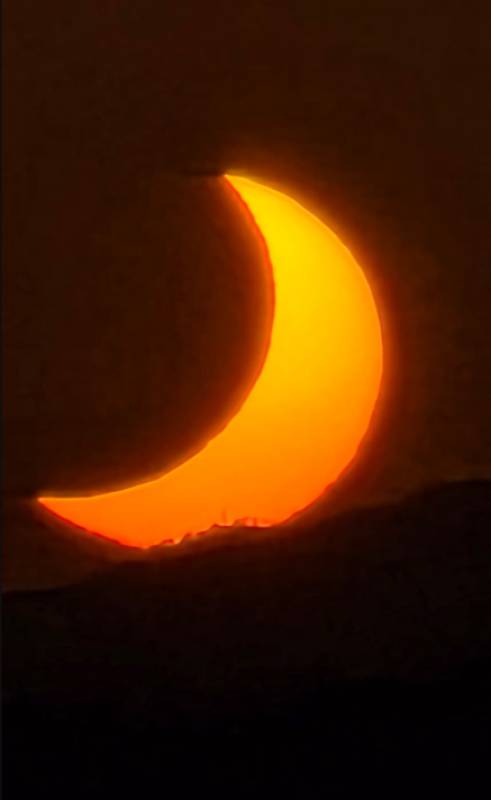
Image: Ayuntamiento de Murcia
Alicante was one of the most frustrating examples. Around 20,000 people gathered at some of the city's best viewing spots, including Tabarca, Serra Grossa and the area around Santa Bárbara, hoping to see the Moon completely cover the Sun.
Instead, clouds obscured the crucial part of the eclipse for many of those who had turned out. The city did at least experience the dramatic darkness that came with the eclipse, with some of Alicante's streets and landmarks appearing to be plunged into night earlier than expected.
Naturally, the disappointment soon turned into humour, with social media users joking about southern Spain's very own "non-eclipse".
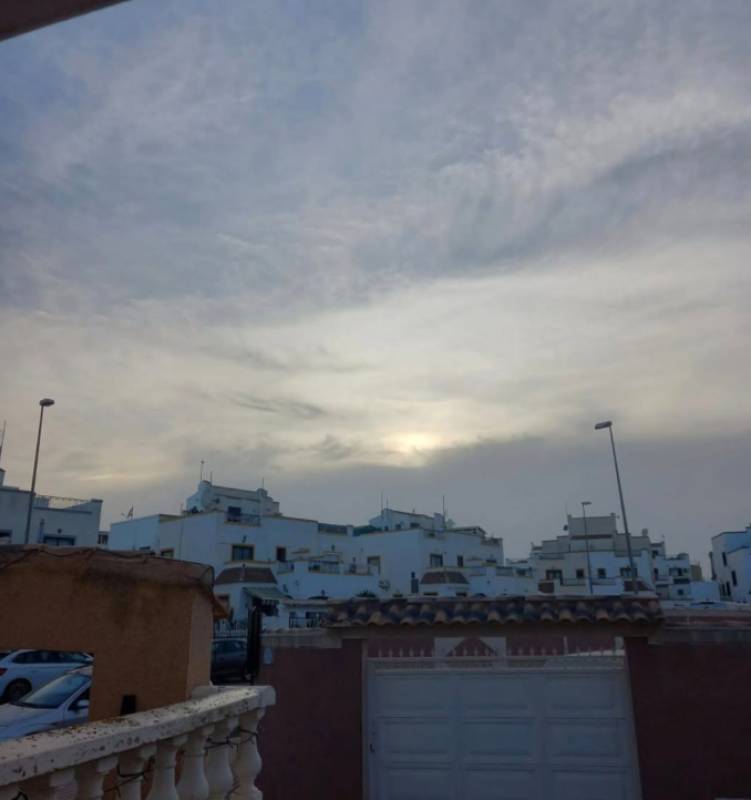
Image: The Bay Barbershop
One widely shared comment pointed out the cruel timing: "More than 2,000 hours of sunshine a year, and of course it is cloudy today."
Another joked that the Costa Blanca pretty much gets sunshine 365 days a year, only for the clouds to arrive on the one day everyone actually needs a clear sky.
It wasn't just Alicante that suffered. People in Murcia, La Manga and Lorca reported similar frustration, with clouds appearing around the crucial period. Others in Mallorca, Asturias, Cantabria, Dénia and the Pyrenees also described watching the eclipse disappear behind cloud.
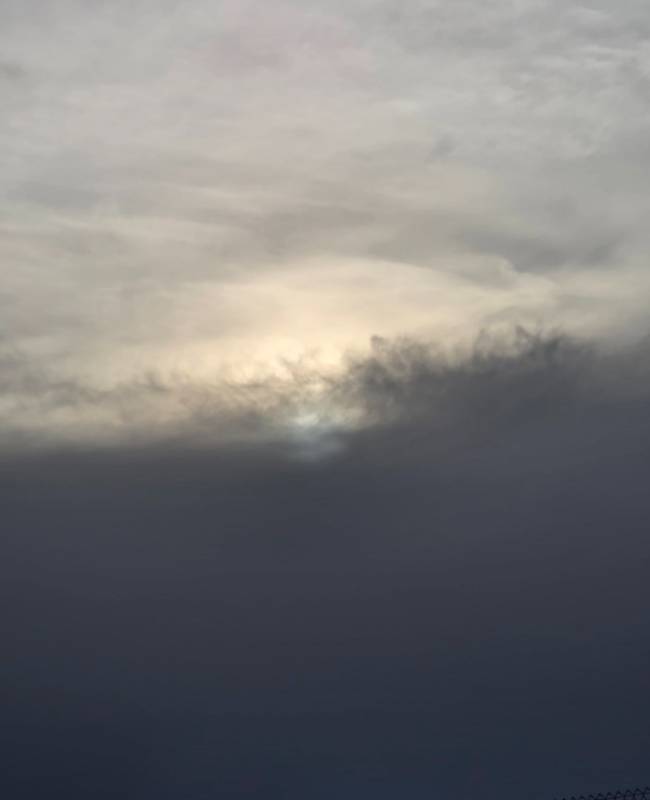 For some, the experience was particularly painful because the skies had been clear for days beforehand. One of the recurring complaints from disappointed viewers was that after weeks of seemingly endless sunshine, the clouds somehow managed to arrive just in time for the eclipse.
There was certainly no shortage of people who did get lucky, however. From parts of northern Spain to the Mediterranean coast, clear patches produced some spectacular views, while photographs from locations along the eclipse's path captured the brief moment when daytime turned dramatically dark.
For anyone who came away feeling that they'd missed out, there is some very good news.
You won't have to wait long for another chance.
On Monday August 2, 2027, another total solar eclipse will cross Spain, although this time the action will move much further south.
The totality band will pass across almost the whole of Cádiz province, large parts of Málaga and the southernmost parts of Granada and Almería, as well as Ceuta and Melilla. The rest of Spain will see the eclipse partially.
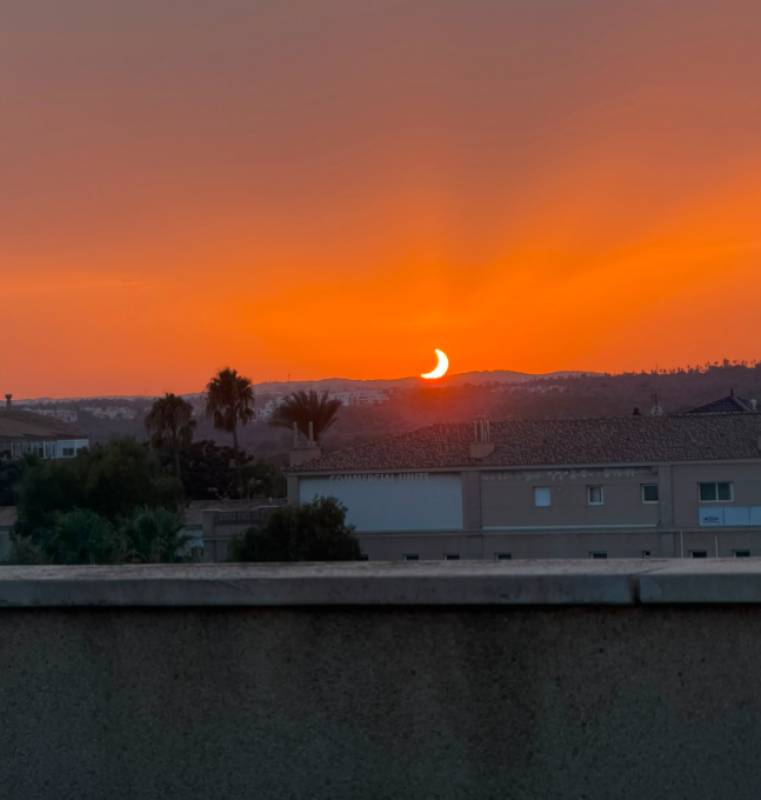
The eclipse in Cabo Roig, Orihuela Costa, courtesy of Ronan McCabe
That could be particularly good news for people living in the south of the country, as the 2027 eclipse will take place in the morning rather than close to sunset.
Totality in Spain will occur at around 10.50am, giving viewers a much higher Sun than during this year's event. The best place in Spain for the longest period of totality will be Ceuta, where the Moon will completely cover the Sun for 4 minutes and 48 seconds. Melilla will get around 4 minutes and 34 seconds, while Cádiz will have almost three minutes and Málaga around 1 minute and 48 seconds.
The 2027 eclipse will also be part of a remarkable trio of solar eclipses visible from Spain between 2026 and 2028. Following this year's total eclipse and next year's event, an annular eclipse will cross Spain on January 26, 2028. It will be visible as an annular eclipse from places including Seville, Málaga, Murcia and Valencia, although the Moon won't completely cover the Sun.
So if yesterday's eclipse was spectacular from where you were, you got lucky. If you saw only a darkening sky, a few glimpses through the clouds or absolutely nothing at all, you're definitely not alone.
And if your view was ruined by a perfectly timed Spanish cloud, there's no need to give up on eclipses just yet.
Next year, southern Spain gets another go.