









PROPERTY SEARCH

Squatting complaints fall in Spain but thousands of homeowners are still facing nightmare battles
The Valencian Community recorded a rise in squatting reports while Murcia registered 425 cases last year
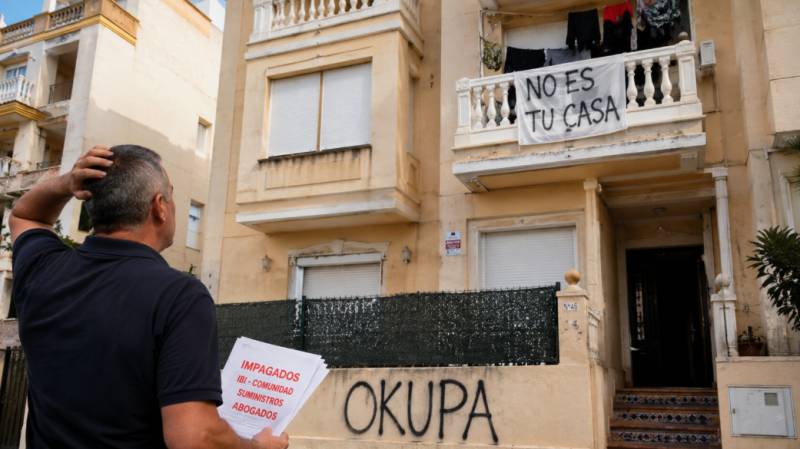
Reports linked to squatting in Spain may have fallen slightly last year, but for many homeowners the issue remains one of the country’s most frustrating and emotionally charged problems.
New figures from the Ministry of the Interior show that 14,875 complaints related to squatting and illegal occupation were reported to police in 2025, almost 10% fewer than the previous year.
Even so, the numbers remain dramatically higher than they were little more than a decade ago. Back in 2010, Spain recorded just 2,702 complaints. By 2014, that figure had already surged past 16,000 and the issue has remained a major source of political debate ever since.
Catalonia once again accounted for the highest number of cases in Spain, with 5,913 complaints last year, representing almost 40% of the national total. Although that was down 15% compared to 2024, the community continues to be considered the epicentre of Spain’s squatting problem.
Andalucía followed with 1,909 reported cases, while the Valencian Community recorded 1,805 complaints, one of the few areas where the problem actually increased last year. Murcia registered 425 cases.
The government has repeatedly attempted to reassure the public that the most alarming scenarios remain relatively uncommon. Interior Minister Fernando Grande-Marlaska previously argued that the majority of cases involve empty properties rather than occupied family homes.
“It’s not like I go down to the store for bread or I go on vacation and they break into my house,” the minister said during a parliamentary debate on the issue.
That comment, however, is unlikely to reassure many homeowners who have spent months or even years trying to remove illegal occupants from their properties through the courts.
While official figures suggest the most serious home invasion cases are statistically rare, critics argue that the emotional and financial impact on affected owners can still be devastating. Some homeowners end up facing legal bills, unpaid utility costs, damage to their properties and lengthy court proceedings while still having to pay mortgages and taxes on homes they cannot access.
The issue has become particularly sensitive in areas with high numbers of second homes, holiday apartments and investment properties, especially along parts of the Mediterranean coast.
And it’s important to point out that official statistics also do not separate basic squatting offences from more serious cases involving unlawful entry into occupied homes because that distinction is usually determined later by the courts.
According to Spain’s State Attorney General’s Office, only a very small percentage of generic squatting offences involved actual home invasions. Even so, the wider problem continues to generate enormous public anger, particularly among owners who feel the legal system still moves far too slowly once squatters get inside a property.