










Spanish News Today Editors Roundup Weekly Bulletin Feb 13
TOP STORIES: "Spain smashes tourism records again, but how long can the bubble last?" & "The Wetherspoon pub in Spain is finally open!"
Will whoever is eating all those beans please stop it, already?! That’s quite enough wind now, thank you very much. All this ayuntamiento tape wrapped around every other tree in danger of falling and crushing people is really not doing anything for my Valentine’s spirit…
On the plus side, if it’s still this dismal and dangerous outside, it’s the perfect excuse for you to sit down in a comfy chair and read this week’s Spanish News Today Editor’s Roundup Weekly Bulletin from top to bottom
Off the rails, then back on track

What began as a planned three-day nationwide rail strike at the beginning of this week ended up pretty much like your standard rail journey itself: confusion over who is supposed to be where, and when; people hopping on and off the wagon like it’s going out of style; and the agreements coming in late and over budget.
As you will already know, the roots of this whole dispute lie in the two tragic train accidents in January – the AVE which derailed in Adamuz, killing 46 people, and the Rodalies commuter service in Catalonia that crashed just two days later, killing the driver. was involved in a second fatal accident. These back-to-back incidents rightfully sent shockwaves through Spain’s rail network and brought to light apparently long-standing concerns among railway workers about safety, staffing and investment that they said they had been trying to highlight for ages.
That’s why Spain’s main railway unions, including CCOO, UGT and the train drivers’ union Semaf, called a three-day strike scheduled to run from Monday February 9 through to Wednesday February 11, calling for improved safety measures, increased maintenance funding and more staff across the rail network.
However, from the outset, there was disagreement over the scale of the strike. Unions claimed participation was total, arguing that 100% of staff, not only drivers, had joined the action. Renfe, the national rail operator, placed participation at a measly 11.6% on the first day.
Not only that, but the minimum service requirements that the government imposed in an attempt to limit disruption were apparently not fully respected. The first day of the strike saw significant cancellations: more than 330 high-speed and medium-distance trains operated by Renfe, Ouigo and Iryo were pulled, alongside hundreds of commuter services, and stations in major cities experienced serious delays, overcrowding and confusion.
And then, suddenly, at the negotiating table between union representatives and the Ministry of Transport on Monday, a breakthrough was reached, and the three major unions announced what they described as “an historic agreement”. The planned three-day strike was effectively called off after just one day for those unions signing the deal.
At the heart of the agreement is a €1.8 billion investment package aimed at strengthening Spain’s rail infrastructure and improving safety. Annual maintenance spending on the railway network will increase progressively between 2026 and 2030, rising by between €150 million and €250 million each year depending on the period. Over four years, this will total €1.8 billion. Maintenance budgets for both high-speed and conventional networks will rise significantly above previous projections, with spending on the high-speed network set to exceed earlier forecasts by 40% by 2030.
It’s hardly surprising, though. I mean, given the public backlash over last month’s catastrophic rail disasters, the government really had no choice but to promise a massive cash injection into the entire network.
But, to bring more twists to this story than a mountain railway track, not all unions accepted the deal. The CGT railway sector, SFF-CGT, along with the Intersindical Railway Union and the Alternative Railway Union, chose to continue with the originally planned stoppages, and as a result, disruption continued on Tuesday and Wednesday.
Around 700 train cancellations were reported nationwide the final day alone. Renfe cancelled 85 AVE high-speed services, 150 regional and medium-distance trains and approximately 450 commuter services.
High-speed routes such as Madrid to Barcelona and Madrid to Galicia were particularly affected, and disruption was also reported in Málaga, Cádiz, León, Asturias, Cartagena and Gipuzkoa.
Still, staff participation in the strikes dropped sharply, to 2% on Tuesday and just 1.9% on Wednesday, and described the strike’s impact as limited, although it acknowledged operational knock-on effects across multiple lines. The company explained that the rail system operates “like a chain”, meaning the absence of key staff can quickly affect services far beyond the original point of disruption.
By the end of Wednesday, the strike had run its course. What began as a show of force over safety concerns resulted in a substantial funding commitment and thousands of promised new jobs – success! – but not before several days of cancellations, crowded platforms and frayed tempers reminded passengers just how fragile even a well-used rail network can be when it briefly *ahem* comes off the rails.
🥄 🥄
There’s a new reason to arrive at Alicante Airport ridiculously early for your flight home and it comes with bacon, sausages and a cold pint waiting for you in departures.
Wetherspoon has finally made its Spanish debut, opening its very first outlet on mainland Europe right in the heart of the Costa Blanca airport this Monday just gone, February 9. The pub, named Castell de Santa Bàrbera, is already proving to be exactly what thousands of British holidaymakers didn’t know they were missing.
Tucked in next to the loos across from gate B30, it’s perfectly positioned for anyone flying back to the UK after a week or two in Benidorm or along the coast. The pub opens at 6am every single day and stays open until 9pm, so whether you’re catching an early morning flight or heading back later in the day, you can squeeze in one last taste of home before you leave.
Inside there’s nearly 1,000 square feet of space that feels bright, airy and really welcoming. The design is a world away from the usual highstreet Spoons back home – forget the famous patterned carpets, because here you’ve got Spanish tiles and cream walls instead.
It’s not massive but it doesn’t feel cramped either, and there’s even an outdoor terrace for anyone who fancies a cigarette with their drink. The Budweiser Bar up around the corner has definitely got some competition now.
The staff are brilliant too, all speaking excellent English and bringing that cheerful, friendly vibe you’d hope for when you’re juggling suitcases and boarding passes.
 Kelvin Nicholas was one of the very first people through the door and wasted no time ordering a pint of Guinness. He’d spotted the Wetherspoons sign from outside the terminal when his taxi pulled up and made a beeline straight for it before his flight back to Southampton. As someone who pops into his local ’Spoons a couple of times a month back home, he knew exactly what he was getting.
Over in the corner, Andrea and Warllen Duque from Dublin were working their way through pizza and chips before their flight home. The couple own a villa in Spain and were pretty impressed by what was on offer. Andrea, a 56-year-old retired teacher, said she’s delighted because they don’t usually bother with the food options at Alicante Airport, but the variety on this menu has won her over.
And what a menu it is. Around 90% of what you’d find in a typical Wetherspoons back in the UK has made the journey to Spain, including the holy grail for homesick Brits: a proper full English breakfast.
You’ll get fried eggs, bacon, Lincolnshire sausage and baked beans for €10.25 (about £8.94). Yes, that’s more expensive than the £5.09 average you’d pay at a British branch, but the company reckons it’s cheaper than most of their UK airport locations and let’s be honest, everything costs more at airports. Bacon, sausage or veggie butties will set you back €5.95.
There are a couple of notable gaps though. Fish and chips didn’t make the cut because the kitchen doesn’t have a deep fat fryer and the beloved British-style curry is missing too. Instead, you can go for one of two Japanese Katsu curry options if you’re after something with a bit of spice.
To keep things interesting, they’ve also thrown in some Spanish favourites including ‘huevos rotos’ (two fried eggs with chips and Iberian ham), Spanish tortilla and garlic prawns.
When it comes to drinks, a 550ml Amstel or 580ml Stella Artois costs €5.95, a Guinness will run you €7.50 and a BrewDog Punk IPA is €4.95. If you want to keep the holiday feeling going for just a little bit longer, cocktails like Godfather, Woo Woo and Sex on the Beach are all €9.95.
It’s definitely not as cheap as your favourite Spanish beach bar, but it’s pretty much what you’d expect to pay at any other airport pub.
Wetherspoon founder and chairman Tim Martin is clearly excited about the move. He said the pub will appeal to a wide range of travellers passing through Alicante Airport, not just those heading home to the UK but also people using the terminal for trips to England and beyond. The company is planning to open more pubs overseas in the coming months and years, including more airport locations, so that’s something to look out for in future!
So now to wrap up your holidays there’s a proper British pub waiting for you in departures. And what better way to say goodbye to Spain than with a full English and a pint?!
On holiday

Amid all the noise about anti-tourist protests, Airbnb crackdowns and plane fee hikes, it might be a fair question to ask: how is Spain’s tourism sector faring? Well, the numbers are in and they show that Spain’s tourism sector closed 2025 on a financial high, but not all that glitters is golden sand and sea.
On the surface, the numbers look impressive. Tourism revenue reached a record €134.7 billion in 2025, and Spain welcomed 96.8 million international visitors. The UK remained the country’s largest source market, with close to 19 million British travellers. Overnight hotel stays also hit record highs towards the end of the year.
Yet much of that growth has been driven by foreign visitors rather than Spaniards themselves, with trips taken by Spaniards within Spain falling by 5.8% and travel abroad by Spanish residents rising by 4.7% and spending abroad increasing by 8.5%. So why are Spaniards choosing to holiday outside of their own country more now?
As with most explanations for human behaviour, it comes down to money. According to the INE’s tourism price index, tourist prices in Spain are now 49% higher than in 2021. For instance, the average daily hotel rate reached €127.70 by the end of 2025, up 5% on the previous year and nearly 50% higher than in 2019.
This is reflected in changing behaviour among international visitors, too. Although daily spending per visitor rose to €195 in 2025, the average length of stay fell to 7.1 days, a whole day shorter than the year before. In effect, fewer nights are being booked, but at a higher daily cost. Spain’s tourism growth appears to be driven less by mass numbers and more by higher per-capita spending.
The Canary Islands make a good case study. For decades, the archipelago has been a cornerstone of Spain’s success with holidaymakers, both foreign and domestic. Tourism accounts for almost 37% of the Canaries’ economy.
But tensions are increasingly visible. Concerns over overcrowding, housing shortages and pressure on public services have fuelled social debate across the islands, while at the same time, some British travellers are described as feeling fatigued by packed resorts and rising prices. Although visitor numbers remain high, there are signs that the long-standing relationship between the Canaries and the UK market is evolving.
In contrast, the Atlantic island chain of Cape Verde is apparently becoming a more popular alternative, offering similar winter sun but less packed with tourists. For now, the Canary Islands still receive roughly 10 times more tourists than Cape Verde, but there has been a noticeable uptick in tourism there while the Canaries’ has dropped.
Another interesting stat that came out this week showed that, after years of rapid expansion, the number of registered tourist apartments fell in 2025 for the first time since 2022. According to the INE, there were 329,764 holiday rental properties in November 2025, down 12.4% on the previous year. The total has dropped sharply from a peak of 403,267 in August 2024, a decline of more than 73,000 properties.
The reduction has been particularly marked in the Valencian Community, Madrid and Murcia, each recording falls of more than 25%, with Murcia seeing the steepest proportional drop at 33.1%. Catalonia, the Balearic Islands and Galicia also saw notable declines. Only Andalucía and Extremadura recorded growth, with Andalucía now accounting for 27.8% of all tourist apartments nationwide.
Tourist flats now represent 1.24% of Spain’s housing stock, down from 1.41% a year earlier. The government attributes the decline to the stricter regulation that has been brought in, such as the registration system that requires owners to prove their properties are legal before advertising online. Authorities say 86,000 illegal short-term rentals were identified in a single year and shut down.
The problem with this is that the official figures may not capture the full extent of the market, as they are based on listings from the three main rental platforms. Tenant organisations are warning that illegal rental apartments remain common, and fall under the radar of those taking the market’s pulse.
All in all, it kind of seems like Spain’s tourism model is entering a new phase – revenues are at record levels, but growth is increasingly reliant on higher spending rather than ever greater numbers. Domestic travellers are looking abroad, international visitors are staying for shorter periods, and destinations face mounting pressure to balance economic gains with housing affordability and quality of life. You’ve got to wonder how sustainable this all is, and what the upshot will be for a country with 5,000 miles of coastline and where tourism accounts for one-eighth of the GDP.
Murcia
Continuing on the theme of money, but on a slightly different tack now, a well-known insurance broker in San Javier has been arrested after allegedly selling fake car insurance policies to expat residents in the Mar Menor area, leaving drivers unknowingly uninsured and exposed to fines and liability.
The 40-year-old woman, who ran a franchised office linked to a major national insurer, is accused of taking clients’ money without properly registering their policies. The Guardia Civil launched ‘Operation Roncol’ last summer after several residents reported that routine police checks had revealed they were driving without valid insurance, despite having paid for cover.
Investigators found that the brokerage office had closed and the manager had disappeared, prompting a deeper probe into bank accounts and phone records. By tracing payments and communications, officers identified the suspect and uncovered what they believe was a scheme involving an intermediary company used to channel funds.
So far, 11 victims have been confirmed, and the woman now faces charges of fraud and document falsification.
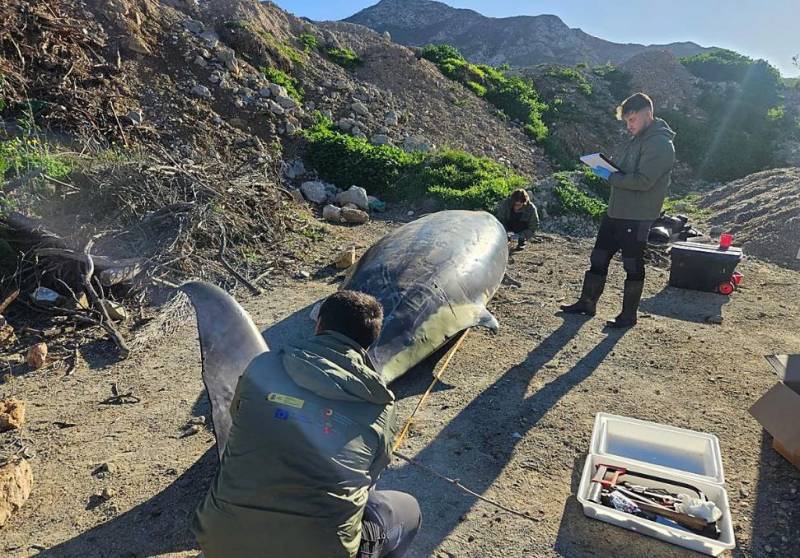 An investigation of a different kind has begun along the coasts of Murcia and Almería after four Cuvier’s beaked whales were found stranded on the same day in late January. The animals appeared in Mazarrón, Águilas and Almería, all within a short timeframe, what the boffins called an “atypical mass stranding” event. Which really means that they have no clue what could have happened.
After carrying out necropsies and collecting organ samples (gross), they have ruled out infectious disease as a cause of death, and attention has turned to possible human-related factors. Environmental groups have pointed to naval activity in waters off Mazarrón in the hours before the strandings, and the fact that previous research has linked some mass strandings of this species to sonar used in military exercises, which can cause stress responses and injuries similar to decompression sickness.
The area is designated as a Special Area of Conservation but has also hosted authorised naval manoeuvres for decades. It will take time and more evidence to reach firm conclusions, of course, but in past cases in the Canary Islands, it was found that naval activity was leading to the deaths of these animals and restrictions were eventually imposed.
From the open sea to our region’s favourite lagoon, it has been revealed just how much (or how little) of the money allocated to restore the Mar Menor has been spent. Out of a total of €675 million, just over €110 million has so far been spent, according to the latest update from the Ministry for Ecological Transition.
Although €226.6 million has been formally committed, actual expenditure amounts to 16.3% of the total budget, prompting people to ask pointed questions about the pace at which plans are being translated into visible improvements.
Among the projects under way is dune restoration in La Manga, aimed at protecting fragile coastal areas from erosion and heavy seasonal use; subsidies to help livestock farms improve their manure storage and reduce runoff into the lagoon; and flood prevention schemes such as the creation of a floodable park in Los Alcázares and drainage works in the Rambla de Cobatillas. A good start, but there’s still a long way to go and a lot more to do!
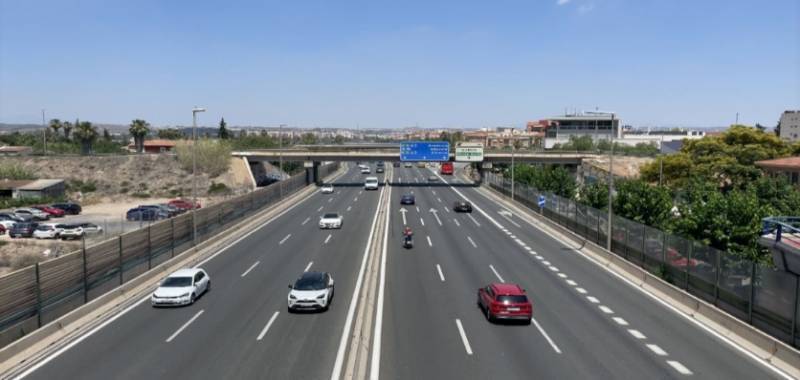 Regional road news now, and on the A-30 autovía (now designated the MU-33 on the relevant stretch) work is advancing on a fourth lane between southern Murcia and Cartagena, although the project is already three months behind schedule. The €11.8 million expansion is supposed to ease congestion by creating a holding lane for vehicles exiting onto the MU-30 towards Alcantarilla, preventing tailbacks from disrupting through traffic. An 18-month construction period is planned, with completion now expected in summer 2027 rather than next March.
Flood resilience is also the focus of drainage works on the RM-19, a road linking the A-30 and AP-7 that frequently floods after heavy rain. The second phase of improvements, costing more than €1.1 million, aims to widen channels, install concrete drainage frames and reinforce embankments to keep water flowing and traffic moving.
Elsewhere, road links to the future Cercanías train station in Alhama de Murcia are finally moving forward as part of the Murcia-Almería high-speed corridor. A €2.9 million contract has been awarded for new access roads, including an extension of Calle Lorenzo Rubio with cycle lanes and pedestrian paths, and a 930-metre bypass connecting the RM-608 and RM-E10.
Local officials say the next step is to press for completion of the RM-2/A-7 junction to ease wider traffic pressures.
If you do manage to drive anywhere this weekend, given all those roadworks and raging winds, you could do worse than the Carnival celebrations beginning in Santiago de la Ribera this Friday evening (or any of the other carnivals taking place around the Region, for that matter – just make sure it hasn’t been cancelled or delayed due to the weather), or a Valentine’s Day tourist train trip around Los Alcázares also on Friday.
Whatever your poison, remember you can check our EVENTS DIARY for more events and activities coming up soon around the Region of Murcia:
Spain
At last! Councils across Spain are finally taking more of a no-nonsense approach to disgusting dog mess on the streets, and Tarragona, near Barcelona, is the latest city to join the crackdown. From August 15 this year, every single dog will need to have its DNA registered with the municipal dog registry or owners could be looking at a €1,500 fine.
The city council says it’s all about creating a cleaner and healthier city, and they’re prepared to hit pockets hard to get the message across.
The way it works is pretty straightforward. A company called ADN Canino collects saliva samples from dogs (completely painless, apparently) and creates a genetic profile that gets matched up with the dog’s microchip information. If someone doesn’t pick up after their pet and the council finds the mess, they can test it, match the DNA and track down the owner. It’s like CSI, but for dog poo! Caca Squad Investigation, maybe? Checking Stool Infractions?
Tarragona is far from alone in this. Around 81 municipalities across Spain have already brought in mandatory dog DNA schemes, with the system taking off particularly in Andalucía, the Valencian Community, Catalonia, Madrid, the Balearics, Murcia and the Canaries.
In Málaga province alone, Fuengirola, Mijas, Benalmádena, Estepona and Torremolinos all require registration. Rincón de la Victoria on the Costa del Sol started its programme in January, and Madrid’s Tres Cantos has been actively fining owners using DNA matching since late last year.
There’s no national law requiring dog DNA registration yet, but with more councils jumping on board all the time, it looks like this could be the future across the country. It certainly does feel like we’re living in the future now!
 Speaking of the future, mark your calendars for December 22, 2032 because that’s apparently when a massive asteroid is going to smash into the Moon in what scientists claim will be the most violent cosmic event humanity has ever witnessed. Asteroid 2024 YR4, roughly the size of a 15-storey building, will hit the lunar surface at 48,000kmh and release energy equivalent to 8 megatons, which is more powerful than any nuclear explosion ever recorded.
“It is the greatest impact ever witnessed by humankind,” said Andrew Rivkin, a researcher at Johns Hopkins University.
When the asteroid was first spotted in late 2024, there were worries it might be heading for Earth, but thankfully scientists worked out pretty quickly that the Moon would take the hit instead. Since then, observatories and space agencies worldwide, including NASA and the James Webb Space Telescope, have been tracking its every move.
The asteroid measures around 60 metres across and will leave a permanent new crater on the Moon’s surface that we’ll be able to see for generations. The boys and girls in the lab say an impact this big hasn’t happened on the Moon for at least 5,000 years, which means we’ll have front-row seats to witness something not seen in millennia, and this time with technology capable of measuring every phase of the collision.
If it all goes as predicted, observers on Earth should be able to see an optical flash through ground-based telescopes, followed by an infrared emission that could last for hours. The slightly worrying bit is that models suggest the collision could eject up to 100 million kilos of lunar material into space.
Some of those fragments might get pulled towards Earth by gravity, creating an artificial meteor shower that will light up our skies weeks after the impact. Sounds spectacular, but the debris cloud could temporarily increase the risk to satellites and orbital stations, so space agencies are already working on ways to protect vital communication and navigation infrastructure.
 Back here on Earth, January always feels a bit grim but this year it was actually gloomier than most. Believe it or not, Spain has just experienced its darkest January since 1996 and the second darkest since records began in 1984, thanks to the relentless succession of storms that battered the country throughout the month.
The figures come from researcher Dominic Royé at the Biological Mission of Galicia, who crunched European satellite data from Eumestat. Spain saw an average of 29 fewer sunshine hours than normal in January, with only 1996 being worse. The country normally gets around 185 hours of sunshine in January, but this year almost everywhere fell below that average.
The only exceptions were Murcia, Almería and the Balearics, which stayed within normal ranges.
This January was also the wettest in the last 25 years, with 85% more rain than the 1991-2020 average. It was the seventh dampest January on record since 1961 and the second wettest of the 21st century, beaten only by 2001.
The reduction in daylight hours has well-known effects on people’s moods, according to Royé, who researches the relationship between health and climate.
“It has a physiological effect but also a psychological one, because it often depresses us, especially those of us who live further north,” he said.
One of the latest storms to hit Spain was Marta, the 13th high-impact storm of the season. Aemet explained that this is the earliest the letter M has ever been reached in the naming system. Until now the earliest was Myriam, which was named on March 3, 2020. And there are still people who think the weather’s not getting worse and weirder with each passing year!
Alicante
A Briton has been arrested in connection with the fatal shooting of a 29-year-old English man whose body was found at an urbanisation in Orihuela Costa just before Christmas. The Guardia Civil’s Homicide Team made the arrest this week after spending a month investigating the killing in the Campoamor area, which they believe is linked to drug trafficking disputes.
Local Police got called to a house in Lomas de Cabo Roig at around 9pm on December 21. Officers turned up to find the young man’s bloodied body and the Guardia Civil took over from there. A few weeks of investigating later and they’ve got their suspect.
What’s interesting is that investigators are looking into whether this murder might be connected to another shooting that happened ten days earlier. On December 11, a 32-year-old British man called Peter F. got shot when he pulled into his garage at home. He’d only been out on bail for two weeks at that point and was supposedly running a gang that was extorting cannabis clubs around the Vega Baja area to take them over.
Peter F., who used to go by Sonny James R., had been banged up for robbing a cannabis club in San Fulgencio. When the Guardia Civil arrested him in Orihuela Costa, three officers got injured in the process and they found two submachine guns plus over 300 rounds of ammunition at his place.
He ended up in hospital for a few days with three gunshot wounds, then somehow got arrested in Merseyside in January even though his bail conditions meant he wasn’t supposed to leave Spain and had to check in with the court every fortnight.
The Guardia Civil aren’t ruling anything out yet, including the possibility this is another gang-related killing tied to UK and Irish drug trafficking operations.
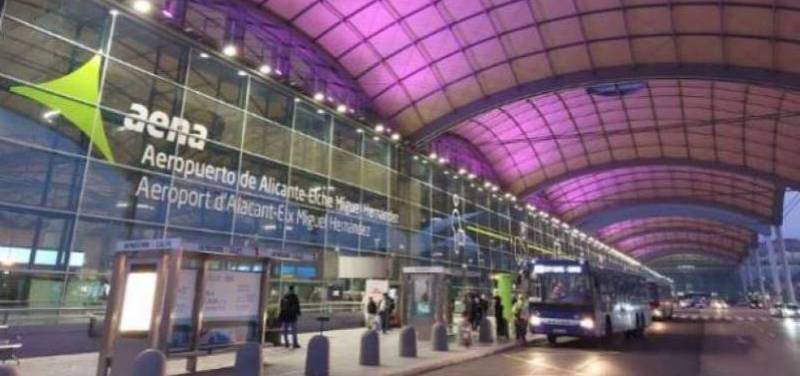 In much less dramatic news, Alicante-Elche Airport is getting a new taxiway built between late February and early March as part of its massive expansion programme. The taxiway will help planes move around more efficiently on the ground, cutting down turnaround times and opening up more flight slots.
A Valencian company called Pavasal nabbed the contract last August for just over €16.7 million, which was way under the €21 million budget.
The construction camp should be ready by the end of February and then it’s all systems go. They’ll start with drainage pipes and other installations, level out the ground, put in lighting and new towers, extend the perimeter fence and finish up by paving and painting the apron area.
The whole thing is scheduled to take 27 months maximum, with most of the work happening at night and during quiet periods so flights aren’t affected. They’re planning to spread it across this winter and next winter to keep disruption to a minimum.
The airport’s already got nearly €11.3 million worth of upgrades underway since late 2023, including a new management centre, better air conditioning in the jetways, solar panels on the car park canopies and bigger boarding gates. They’re about to hand Acciona a €5 million contract to fix up the VIP lounge that’s been shut since a fire in 2020, which brings total investment to more than €33 million.
But the really big news is that the airport’s almost ready to award the contract for designing a major terminal expansion that’ll cost €1.154 billion. When it’s all done, the airport should handle at least 26 million passengers instead of the current record of 19.9 million.
After the grimmest January Spain’s seen in years, February’s almond blossom season couldn’t come at a better time. National Geographic has just named Tàrbena, a tiny village in Marina Baixa, as one of the top spots to see almond trees in bloom.
The village sits tucked between three mountain ranges where the hills go white and pink for a few weeks every year, and with its whitewashed houses and the ruins of an old Almohad castle clinging to
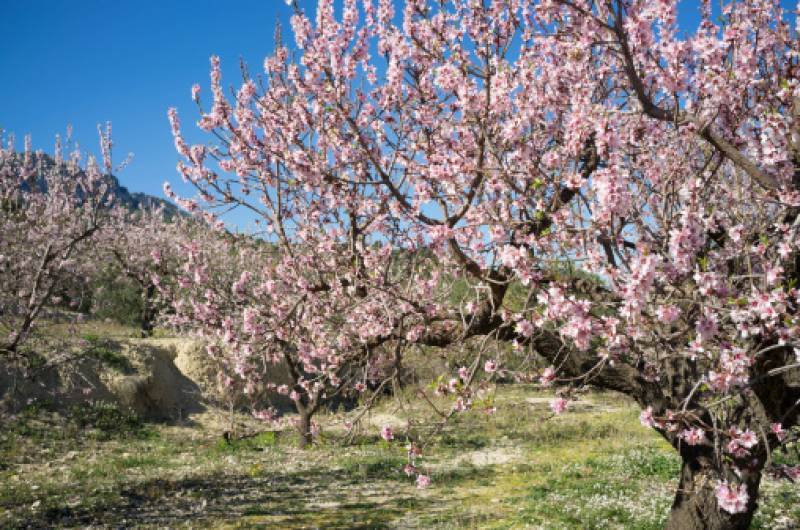 the hillside, the views are properly stunning.
the hillside, the views are properly stunning.There are plenty of other spots around Alicante province to catch the almond blossom without the crowds though. Hondón de los Frailes has quiet paths lined with flowering trees, the Vall de Pop around Alcalalí offers gorgeous countryside trails where the terraces fill with blooms, and Castell de Castells has routes through old almond groves with cracking views of the mountains and villages beyond.
The almond blossom season is short; it usually peaks in February. So, for anyone wanting to celebrate the fact that winter is coming to an end and spring is just around the corner, now is the moment to make plans!
Remember, too, that the 2026 Carnival celebrations kick off in Alicante city this weekend, with the ‘Ramblero Saturday’ being the big event to look out for ahead of the series of activities planned over the next three-and-a-half weeks (if they’re not rained/winded off, that is!).
For other events and activities happening in the area, check out the What’s On page of Alicante Today or join the Costa Blanca What’s On and Where to Go Facebook group
Andalucía
The Málaga town of Torremolinos is mourning Robert Davidson, a 37-year-old British father who died after falling from a hotel balcony late on Tuesday February 3.
He was holidaying with fiancée Daniella Robb, 27, and their two children at the Sandos Griego hotel when tragedy struck just after 11pm. Policía Nacional pronounced him dead at the scene.
 Now, this is not your usual drunken ‘balconing’, Brits-behaving-badly story you might at first assume. The family had arrived from the UK on Sunday February 1 to mark the anniversary of their baby daughter Hollie’s death from sudden infant death syndrome a year earlier. Daniella said the evening felt normal. The children were at kids’ entertainment, Robert was chatting at the bar, then he kissed them goodnight, stepped onto the balcony for a cigarette, and fell. Police are probing if it was accidental.
The thing is, in addition Robert had a fractured skull and brain bleed from a Christmas Eve accident and wasn’t coping emotionally, though a new telecoms job was lined up for him.
“Robert was really struggling,” Daniella shared. “He had been devastated at losing Hollie. We still were.”
Following the very sad accident, a GoFundMe page has raised over £10,000 to repatriate his body and get him home to his family.
“We all loved him so much,” added Daniella. “He was hilarious... the most loving person.”
In the wider Andalusian region, the tourism sector is thriving like never before. The region welcomed 37.9 million visitors in 2025, up 5.2% from 2024, with international arrivals rising 6.6% and domestic 5%.
Tourism minister Arturo Bernal said the results “not only exceed our expectations but also confirm the strength of a model that prioritises quality, revenue and employment.” Spending per day hit €87.35, per trip €542, with revenue nearing €27 billion and total impact over €30 billion.
Jobs averaged 482,000, peaking at 531,000, accounting for 43% of new employment with just 20% temporary contracts. Hotels logged 57 million overnights; 775 of 785 municipalities saw tourists, 49 gaining internationals for the first time.
Málaga, Granada, Córdoba and Seville led the way for Spaniards, with 139,000 flights carrying 19.6 million passengers, 72% of them foreigners.
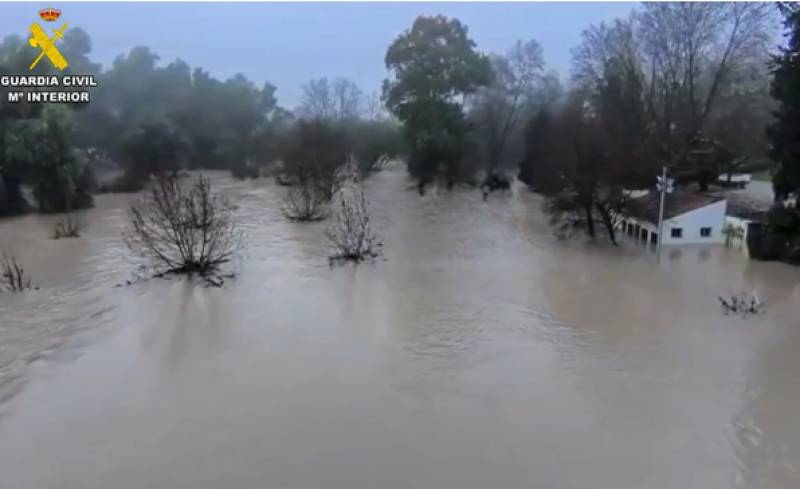
And finally, an update for you on the storm situation in poor, battered Andalucía. Storm Marta has left a staggering toll, with 112 Andalucía handling 10,613 incidents, Cádiz hardest hit at 2,215, followed by Seville (1,893) and Jaén (1,818).
Flood rescues, evacuations and road closures still persist despite easing rain, and over 11,000 people remain displaced from their homes. Thirteen people had to be rescued from a flooded caravan park in Isla Cristina (Huelva) after a wall collapsed, while power cuts hit Benamahoma, Benaoján and Montejaque, and Granada saw slope collapses.
All things considered, it’s a lot more positive than last week, and now recovery is the next thing on everyone’s minds, assuming there are no further mega-destructive storms on the way any time soon. The problem is, rebuilding after all this is estimated to cost in the billions. There are €520 million in agricultural losses in Cádiz alone, and a further €500 million in infrastructure. And that’s just the tip of the iceberg.
Meanwhile, the full evacuation of the entire town of Grazalema (Cádiz) from last Thursday continues, with no return date in store for the more than 1,600 people rushed from their homes and still living temporarily in Ronda (Málaga).
Geologists have gone in and probed the saturated limestone subsoil of the town after it received 1,500 litres of rain over the course of 10 days, and their conclusions are not inspiring. In short, it doesn’t look like the whole place is going to turn into a sinkhole any time soon, and a couple of hundred residents were allowed back briefly last Sunday to pick up some belongings, but there could be a long wait for the people of Grazalema until they can return home for good.
Chins up, everybody… not long until the drier weather comes back – only a month and a week to go until the start of spring!
You may have missed…
- Nearly 90 tremors recorded beneath Mount Teide in three days with unusual seismic signal detected.
Seismic activity beneath Spain’s Mount Teide has ramped up again, with scientists recording close to 90 small earthquakes over just three days under the western side of Las Cañadas del Teide National Park. - Passenger attacks Ryanair employee over hand luggage dispute at Palma Airport.
A passenger at Palma de Mallorca airport got into a violent confrontation with a Ryanair employee at the check-in desk over hand luggage rules. The worker suffered serious injuries, even losing several teeth, while the passenger also hurt himself during the altercation. - Racist anti-migrant signs cause uproar in Spanish tourist town.
A far-right group has sparked fury after placing racist warning signs in a popular tourist area of Tenerife, depicting violence against an elderly woman in what local politicians have condemned as blatant “incitement to hatred”. - Spain gears up for exceptional year with 13 full moons lighting up the skies in 2026.
Stargazers across Spain are in for a treat this year with 13 full moons set to light up the night sky throughout 2026, making it an exceptional year for lunar enthusiasts. - Spain becomes the cheapest solar energy market in Europe as prices hit four-year low.
Spain has cemented its position as Europe's cheapest market for solar energy, with long-term power purchase agreements (PPAs) now at their lowest prices since 2021.
And there we have it for another week. Try not to get blown away this weekend and we’ll see you next week!
See ya!