









PROPERTY SEARCH

PROPERTY SEARCH
Spain recalls six types of eclipse glasses over fears they could damage your eyes
Around 2 million certified glasses are being distributed free across Spain
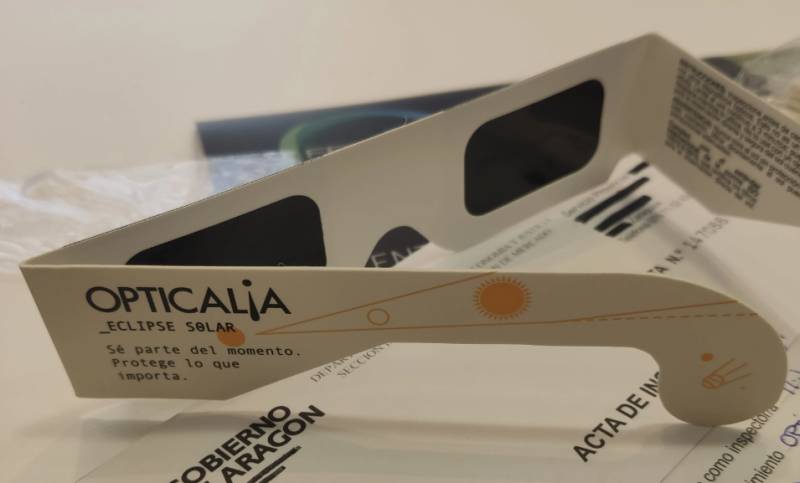
People planning to watch Wednesday August 12's total solar eclipse are being warned to check their glasses carefully after six models were withdrawn from sale over concerns they could put users' eyesight at risk.
Consumer authorities in Madrid, Castilla y León, Galicia, La Rioja and Aragón have identified problems with the filters used in the glasses and ordered the affected products to be removed from the market.
The six models come from Lionstar, ECP Eye Care Professional, Pelispan, Orro, Opticalia and Homanage.
The concern is that some of the filters are too dark, meaning users may be unable to see the Sun through the glasses at all. According to the official withdrawal notices, this could cause people to move or remove the glasses while facing the Sun in an attempt to locate it.
The official warning explains:
"The user puts on the glasses to observe the solar eclipse. Because the filter is below the minimum transmittance (excessively dark), the user sees only total darkness and cannot locate the solar disk. As a predictable reaction, and facing the sun, the user slides the glasses towards their forehead, tilts them, or removes them momentarily to frame the sun's position with the intention of putting them back on immediately. During this unprotected interval, the eyes are directly exposed to solar radiation (visible and infrared/ultraviolet radiation). Chemical or thermal damage occurs to the foveal cells of the retina."
The recalled models are:
• LIONSTAR solar eclipse glasses, model LSP1
• ECP Eye Care Professional Solar Eclipse Glasses
• PELISPAN solar eclipse glasses
• ORRO solar eclipse glasses, model O37-R, lot 2603-01, manufactured March 2026
• OPTICALIA solar eclipse glasses, reference GP0247
• HOMANAGE solar eclipse glasses, model QW-50Z1
Consumer authorities are asking any businesses that still have these products in stock to stop selling them immediately, inform customers about the alert and accept returns.
With millions of people expected to watch the eclipse, demand for safe viewing glasses has soared. The Ministry of Science, Innovation and Universities, together with the ONCE Social Group, is distributing around 2 million approved solar observation glasses free of charge.
The distribution points include:
Andalucía: Museo Interactivo de la Música de Málaga (MIMMA) and Parque de las Ciencias de Granada.
Aragón: Museo Aragonés de Paleontología in Teruel.
Canary Islands: Museo de la Ciencia y el Cosmos in Tenerife, Museo Elder de la Ciencia y la Tecnología in Las Palmas de Gran Canaria and Ojos al Cielo in La Palma.
Castilla-La Mancha: Museo de las Ciencias de Castilla-La Mancha (MCCM) and Museo de Paleontología de Castilla-La Mancha (MUPA), both in Cuenca.
Castilla y León: La Fábrica de Luz. Museo de la Energía in Ponferrada and Museo de la Ciencia de Valladolid.
Cataluña: Museu de Ciències Naturals de Barcelona, Museu de Matemàtiques de Catalunya (MMACA) in Cornellà de Llobregat and Parc Astronòmic del Montsec in Lleida.
Madrid: Museo Nacional de Ciencia y Tecnología (MUNCYT) in Alcobendas, Museo Nacional de Ciencias Naturales in Madrid and Real Jardín Botánico in Madrid.
Navarra: Museo de Ciencias Universidad de Navarra in Pamplona.
Valencian Community: Big History. Centro de Divulgación Científica y Medioambiental in Aras de los Olmos, Ciudad de las Artes y las Ciencias in Valencia, Jardín Botánico de la Universitat de València, Museo de Aguas de Alicante, Museo de Historia Natural de Valencia, Museo Didáctico e Interactivo de Ciencias de la Vega Baja del Segura (MUDIC-VBS-CV) and Planetario de Castellón.
Galicia: Museo Nacional de Ciencia y Tecnología (MUNCYT) and Museos Científicos Coruñeses, both in A Coruña.
La Rioja: Casa de las Ciencias in Logroño.
Basque Country: Eureka! Zientzia Museoa in San Sebastián.
Asturias: Bioparc Aquarium in Gijón.
Region of Murcia: Museo de la Ciencia y el Agua de Murcia.
The eclipse's totality zone will cross Galicia, Asturias, Castilla y León, Madrid, Castilla-La Mancha, Cantabria, La Rioja, the Basque Country, Navarra, Aragón, Cataluña, the Valencian Community and the Balearic Islands, meaning huge numbers of people are expected to head outdoors to watch it.
Anyone planning to look directly at the Sun must use glasses specifically designed for solar observation. Ordinary sunglasses, even very dark ones, aren't suitable.
Approved eclipse glasses should comply with the ISO 12312-2 international safety standard and carry the CE marking.
With the eclipse approaching, consumers are also being advised to check the model of any glasses they've already bought and avoid using them if they appear on the recall list.
Image: FACUA