











PROPERTY SEARCH

Remains of 2,500-year-old tower discovered near Alhama de Murcia
The structure at Cabezo de la Fuente del Murtal is unique in the western Mediterranean and sheds light on life in southern Spain 500 years before the birth of Christ
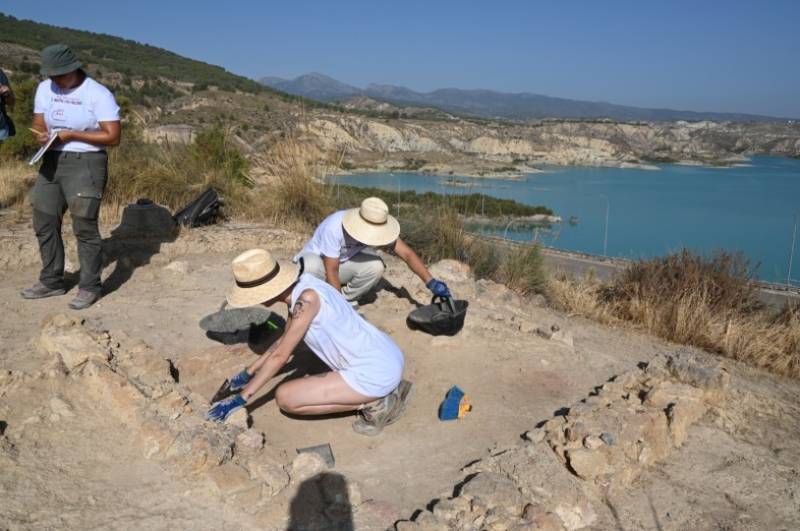
Just when we think we know everything it’s possible to know about the history of the places where we walk the streets and look at the scenery every single day, a new occasionally discovery turns up which can completely change the way in which we think about those who lived here hundreds, or in some cases thousands, of years ago.
That’s exactly what happened this summer at the site of Cabezo de la Fuente del Murtal in the municipality of Alhama de Murcia. The location of the new discovery is a strategically advantageous one, on hilltop which looks out over the Guadalentín vally and the Rambla de Algeciras, as well as the (more modern) reservoir of the same name and the “Badlands” landscape of the Barrancos de Gebas (click here for map).
This means that it was a perfect spot to observe two important communications routes in ancient times, rather like looking out over an airport or a major motorway junction in the present day, and for this reason archaeologists have been so interested in the site, where some evidence of ancient human activity had already been found, for many years.
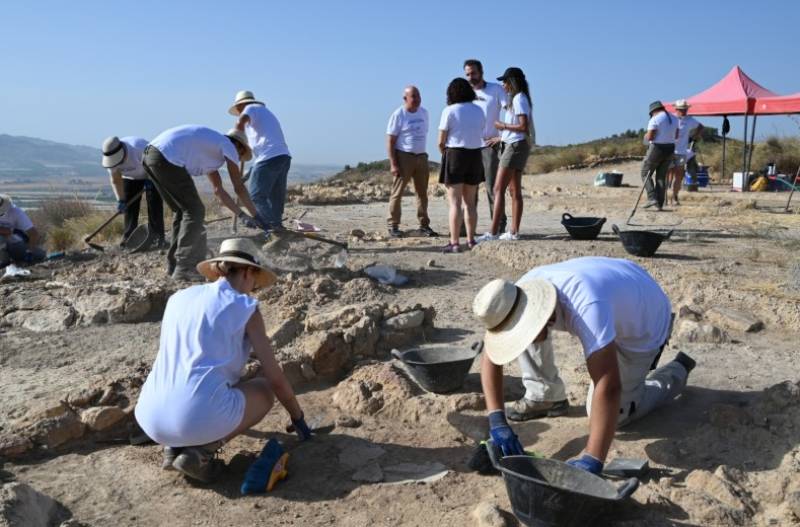 In the summer of 2026, they found justification for their continued interest. While sifting through soil in the normal way, some of the 22 people taking part in the annual dig found that their tools were encountering far more resistance than usual, and further investigation revealed that what they had discovered was a wall.
But not just any wall. This wall was 3.5 metres thick. And 7 metres long.
And this, along with other structures found alongside, leads the experts to believe that it was at the base of a large lookout tower which was built in adobe bricks around 2,500 years ago, in the late 6th century BC, to watch over the valleys and transportation routes below.
According to Benjamín Cutillas, who coordinated the dig this year and is a Professor of Pre-history at the Universidad Complutense de Madrid, there is no knowledge of any similar structure in the whole of the western Mediterranean, with the only comparable sites located in the Near East, in the area of modern Palestine, Lebanon, Jordan and Israel.
So what was this tower doing here, thousands of kilometres away from the nearest known similar construction? Well, Professor Cutillas explains that at the time there was constant antagonism all around the Mediterranean as Phoenicians, Greeks, Carthaginians and local populations fought over the control of trading routes. Whoever controlled one of these routes attempted to safeguard it with robust defensive constructions, and he believes that this tower is an example.
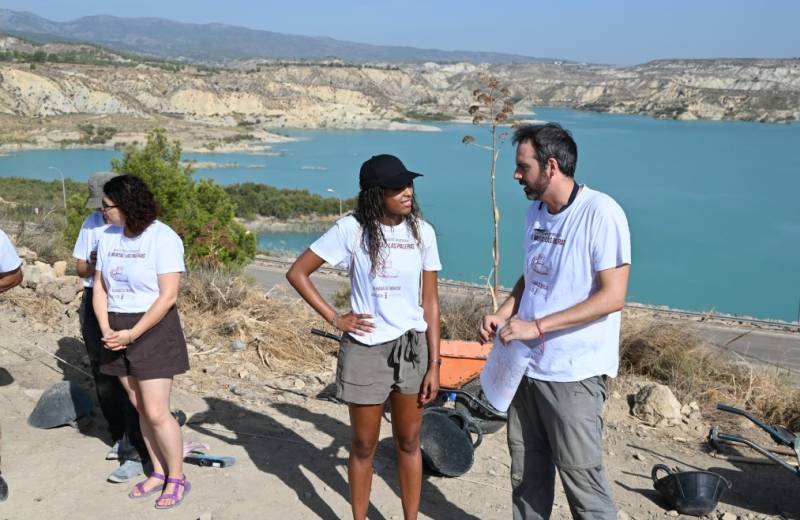 In all, the investigators at Cabezo del Murtal have discovered that the settlement here 2,500 years ago encompassed an area of some 50 hectares, with the centre located at El Castellar, and this, he says, would have made it one of the most important settlements in this part of the Mediterranean over 500 years before the birth of Christ.
José Baños Serrano of the Museo Los Baños archaeological museum in Alhama adds that this is quite possible not only one site, but an indicator of an entire cultural landscape formed by small enclaves which bore the hallmark of different civilizations. A true muti-cultural melting pot!
Of course, El Murtal is not a standalone settlement. Nearby are Castellar de Librilla, Los Zancarrones and others, allowing experts to reconstruct a picture of life in this part of the Iberian Peninsula from protohistory right through to the Middle Ages. And right in the centre of it is the town of Alhama de Murcia.
For more local events, news and visiting information contact the tourist office (telephone 968 633512) or go to the home page of Alhama Today.