









PROPERTY SEARCH

PROPERTY SEARCH
Queues, confusion and pressure as Spain's migrant regularisation opens nationwide
Applicants face long waits and system issues while councils warn of strain on local services
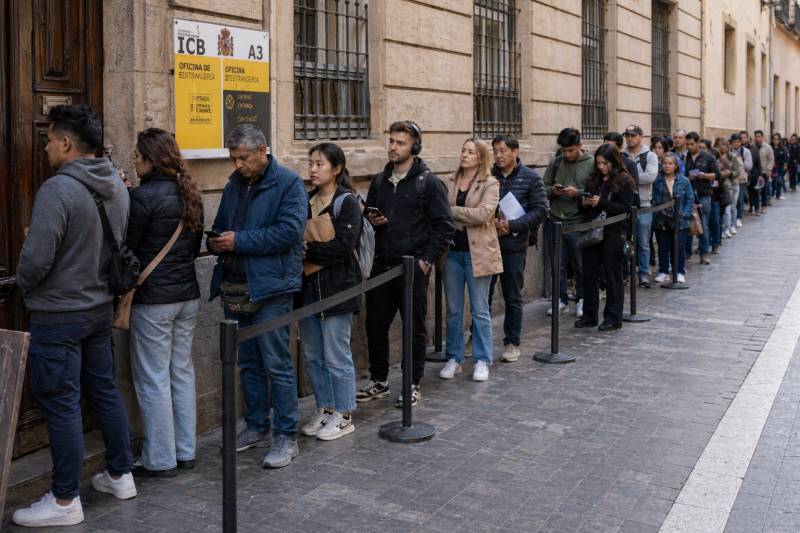 Spain’s new migrant regularisation process has begun with scenes of long queues, technical problems and growing pressure on local services, as thousands rush to secure legal status.
From early Monday morning, applicants gathered outside post offices and Social Security centres across the country, with many waiting hours to be seen. “We arrived around 10.00 or 11.00pm yesterday so we wouldn’t be left out, we’ve been here for about 15 hours,” said Juan, a Colombian applicant waiting in Catalonia.
The process allows migrants who have been in Spain since before January 1, or asylum seekers who applied before that date, to regularise their situation if they can prove five continuous months in the country and have no criminal record.
The scheme had already drawn attention last week, with large queues forming as hopeful applicants began preparing their paperwork and seeking appointments.
In total, 371 post offices are handling applications from 8.30am to 5.30pm, alongside 30 Social Security offices open in the afternoons. Despite this, demand has quickly overwhelmed parts of the system.
In Madrid, applicants reported delays and technical failures. “The system is completely down,” said Cristina, who spent several hours trying to complete her application. Others described confusion over documentation requirements and payment procedures, with unions warning of “significant errors in the information provided.”
For many, the stakes are high. “What we want is work,” Juan explained, reflecting a common motivation among applicants hoping to access formal employment, social security contributions and basic services.
The launch follows the approval of one of Spain’s most controversial immigration measures, aimed at bringing thousands of undocumented migrants into the formal system.
There has also been criticism over how the rollout has been handled, particularly around organisation and communication. In Valencia, Mayor María José Catalá described the start as “a real botch job by the government”, pointing to confusion among applicants and a lack of clear information.
Local authorities, are also warning of the immediate impact. In Cartagena, Mayor Noelia Arroyo said the process is placing “unbearable” pressure on municipal services, particularly as councils are required to issue vulnerability reports. “Since six in the morning, we’ve had queues,” she said, adding that staff hours have been extended to cope with demand.
Similar concerns have been raised elsewhere. In Seville, long lines formed at the Ayuntamiento registry, while in Catalonia and the Valencian Community officials reported overcrowding and criticised the lack of preparation.
In Almería, where around 25,000 people could benefit, authorities have introduced extended opening hours after concerns about capacity, while also stressing that appointments are free and must not be resold.
The scale of interest is clear. In just a few days, more than 42,000 online applications have already been submitted, with nearly 30,000 in-person appointments requested.
For many applicants, despite the difficulties, the process represents a turning point. As one woman waiting in Madrid put it, having legal status means “you can open a bank account, get a job and move forward.”
For now, the coming weeks are likely to remain busy, as Spain works through one of the largest regularisation efforts in recent years, balancing hope for thousands with the practical challenges of delivering it on the ground.