











PROPERTY SEARCH

Murcia recorded 160% more heat-related deaths this summer than last year, the highest toll in the region's history
57 people died from heat-associated causes in the region between June and August, as July brought record temperatures and relentless tropical nights
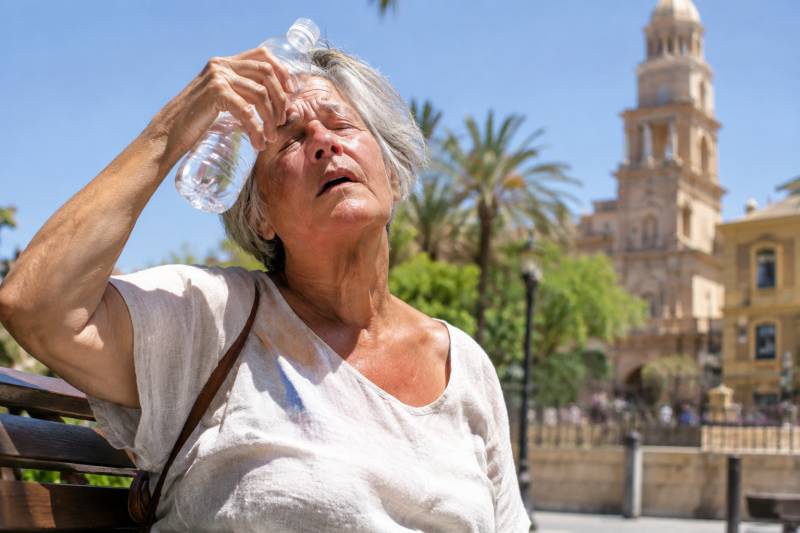 The summer of 2026 has been the deadliest on record for heat-related deaths in the Region of Murcia. According to the MoMo daily mortality monitoring system of the Carlos III Health Institute, 57 people died from causes associated with extreme temperatures between June and the end of August, compared to 22 in the same period last year. That is a rise of 160%, and the highest figure recorded since monitoring began.
The Murcia total forms part of a national picture that was already alarming. As we reported earlier this month, Spain as a whole recorded 5,234 heat-related deaths this summer, the highest figure since monitoring began, driven by four heatwaves and a summer that Aemet has since confirmed as the hottest ever recorded in mainland Spain.
Understanding what these deaths actually represent is important. The vast majority were not caused by classic heatstroke. They were deaths from heart, respiratory or kidney conditions in which excessive heat acted as a trigger, worsening existing illness or causing complications such as dehydration. Diana Gómez-Barroso, an epidemiologist at the Carlos III Institute and coordinator of MoMo, confirmed that "the mortality curve always rises two days after heat waves begin," and that "this year's weather conditions have been unprecedented."
Of Murcia's 57 deaths, 49 were among people aged over 65, and 25 of those were over 80. The Carlos III Hospital also estimates that one child under 14 died from causes related to the excessive temperatures. The age profile reflects what experts have long warned: older people, particularly those living alone or without adequate climate control, are disproportionately at risk.
July was by far the deadliest month. Aemet confirmed it was the hottest July on record for the region, and the figures bear that out. The worst single week was July 20 to 26, when 12 deaths were recorded, coinciding with the longest heatwave of the month, which ran from July 15 to 24. On July 23, temperatures reached 44.7 degrees Celsius in Caravaca de la Cruz, breaking both the July record and the station's all-time annual record set in 2009. Temperatures also exceeded 44 degrees in Zarcilla de Ramos and in Murcia city itself.
The nights were as punishing as the days. All 31 nights in July were tropical in Murcia city, meaning temperatures never dropped below 20 degrees Celsius, with 11 of them reaching the scorching threshold of 25 degrees or above. In San Javier, 29 tropical nights were recorded in July, eight of them scorching. The significance of this is not just discomfort. Continuously high night-time temperatures prevent the body from recovering from heat stress, a particular danger for elderly and vulnerable people.
August brought 19 more deaths, with eight recorded in the single week of August 3 to 9. Though temperatures were still high, the month did not reach the extremes of July.
Julián García Sáez, coordinator of the planetary health group at the Murcian Society of Family and Community Medicine, has emphasised what needs to change. "In primary care, we need to identify which patients live alone or without adequate climate control, and this must be addressed in collaboration with social services," he said. He also pointed to the importance of municipal-level action, from increasing green spaces to improving access to water, as part of a longer-term response to what is becoming a predictable annual crisis.
A recent study published in The Lancet Planetary Health warns that a 1.5-degree rise in average global temperature will put nearly one in four people over 60 worldwide at risk of heat stress. For a region where older residents are already the most vulnerable, and where this summer has just set a new and unwanted record, that warning is not abstract. It is already here.
>>> Follow our Murcia Weather Watch Facebook group for more weather updates or see our Weather & Climate page <<<
Image: AI generated