











PROPERTY SEARCH

Immigration is vital to Spain’s growth, says former ECB chief
Luis de Guindos tells business leaders in Murcia that population growth has driven two-thirds of recent economic expansion
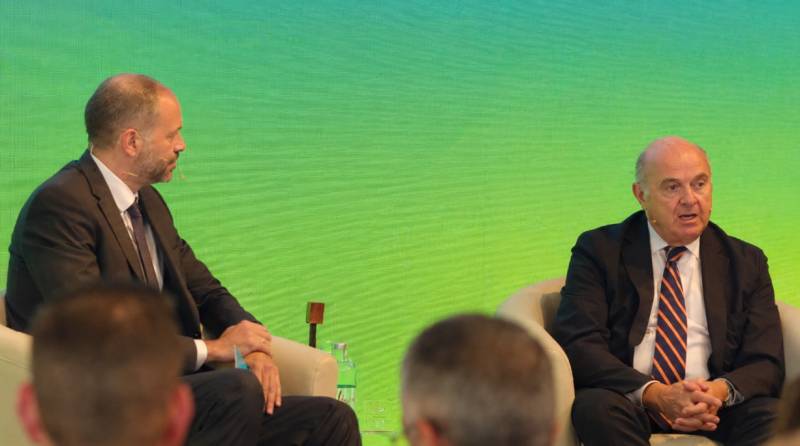 Immigration has been essential to Spain’s recent economic growth, according to former Economy Minister and former European Central Bank vice-president Luis de Guindos.
Speaking at a Cajamar business event in El Palmar, Murcia, before more than 300 entrepreneurs and executives, De Guindos said population growth accounted for about two-thirds of Spain’s recent expansion.
“Immigration is essential. Two-thirds of economic growth is due to population,” he said. “We are now 50 million people in Spain thanks to immigration, which is essential.”
He added that migration needed to be “orderly, legal and directed”.
De Guindos said productivity accounted for only one third of growth in recent years. He argued that Spain needed future growth to come more from productivity and less from population increases.
That shift matters because a larger population has not always translated into a similar rise in living standards. He said GDP per capita and real consumption per capita had improved more slowly, while wages had grown below inflation.
“The macroeconomic data is good, but the public perception is not the same,” he said.
The former minister said Spain’s economy had shown a strong capacity to respond to recent global pressures. He described its banking sector as healthy and said the labour market remained relatively healthy, with unemployment at historic lows since the euro was launched.
However, he warned that Europe faced a difficult mix of weaker growth and inflation close to 4%. He linked rising energy costs to a “global supply shock” and said the situation was precarious because there was less economic activity but more inflation.
“This is the worst situation you can face, because if prices rise as the economy overheats, interest rates can be raised to cool consumption,” he said. “However, we are now in a precarious moment, with less activity but more inflation.”
Despite that, De Guindos said Europe had avoided recession, although growth would remain below 1%.
Housing was another major concern. He said the shortage of homes could become a limiting factor for economic growth and was already a serious social problem.
He called for more investment in education, more housing and a larger supply of rental properties. He said regulation had restricted the rental market and contributed to price rises.
“Increasing the rental supply is a priority to address the problem,” he said.
De Guindos also said the entrepreneurial capacity of Mediterranean regions was more important than the problem of regional underfunding, although he said the latter needed to be corrected.
“Entrepreneurs, even under extremely difficult conditions, always respond impressively well,” he said.
The event at Finca Buenavista was moderated by Cajamar CEO Sergio Pérez. It brought together business owners, managers and institutional representatives from across the Region of Murcia.
Image: AI edited