









Guardia Civil could be sent to drivers who activate Spain’s V16 emergency beacon
The DGT wants traffic officers to respond to every beacon alert across Spain, but staffing concerns have already been raised
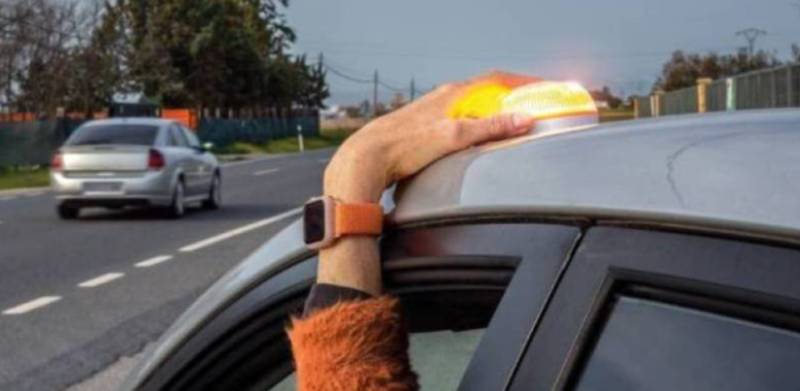
Spain's controversial V16 emergency beacon could soon trigger a more direct response from the Guardia Civil, with the DGT preparing new instructions requiring traffic patrols to assist drivers whenever the connected device is activated.
The measure was announced by DGT director general Pere Navarro, who said the agency is finalising a draft internal order that would turn something some patrols already do voluntarily into a standard procedure.
Under the proposed system, the location transmitted by a connected V16 beacon would alert the authorities when a vehicle has broken down or been involved in an incident, allowing the nearest Traffic Group patrol to be sent to the scene.
Mr Navarro stressed that the purpose of the response would be to help drivers and protect road users, rather than to check whether the stranded motorist had committed an offence.
He described the initiative as an assistance measure, pointing out that helping drivers is an important part of the work carried out by traffic officers. The aim is also to reduce the risk of secondary accidents caused by vehicles stopped on or beside the road.
However, the proposal has already attracted criticism from the Unified Association of Guardia Civil (AUGC).
Its national coordinator, Carlos Cantero, has described the idea as a "pipe dream", arguing that it would be physically impossible for patrols to attend every V16 activation with the resources currently available.
The AUGC says the main problem is a lack of personnel in the Traffic Group, which currently has around 9,000 officers. The association believes around 10,000 would be needed to provide adequate coverage across Spain's road network, while the number available for day-to-day operations is lower still.
That could be a significant issue given the number of V16 alerts being generated. Spain currently records between 2,500 and 3,000 V16 alerts every day, according to the AUGC.
Traffic officers are already dealing with serious accidents, obstacles on the road and enforcement campaigns including alcohol and drug testing, meaning the association argues that automatically responding to every beacon activation would place further pressure on already stretched resources.
The V16 beacon has been mandatory for Spanish-registered cars since January 1, 2026, replacing traditional warning triangles as the official way for drivers to signal that their vehicle has broken down or been immobilised.
The connected device sends the vehicle's location to the DGT's traffic management system, allowing other road users and authorities to be warned about the hazard without the driver having to leave the vehicle.
The latest proposal would add another step to that system, potentially bringing a Guardia Civil patrol directly to the stranded vehicle when the beacon is activated.
Find all the latest motoring and travel news here or join our Driving in Spain Facebook group for regular updates
Image: Archive