













PROPERTY SEARCH

From dry to drenched, the Vega Baja sees rain totals rocket in the last few weeks
Patchy downpours bring big totals to parts of southern Costa Blanca, but not everywhere
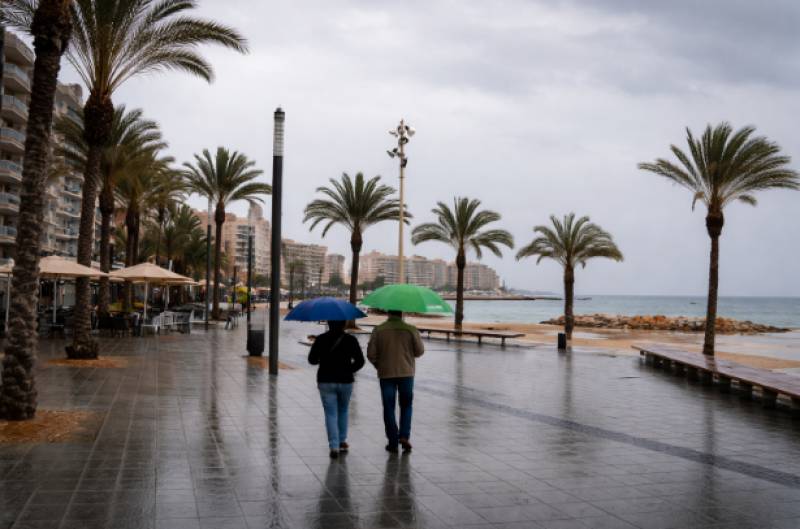
After a very dry start to the year in many parts of southern Spain, the Vega Baja has seen a noticeable shift in recent weeks, with rain returning across the region, although it’s been far from evenly distributed.
This part of the Costa Blanca is better known for long dry spells and sunshine, so even short bursts of rain can quickly add up. That’s exactly what’s been happening lately, with unsettled weather bringing showers on and off rather than steady rainfall.
Figures collected by AVAMET show just how mixed things have been, with some towns seeing much higher totals than others. The data covers both the current month and the year so far, although neither period is complete yet.
One of the standout areas is Pinar de Campoverde, in Pilar de la Horadada, where rainfall has already reached 102.2 l/m² this month alone. The yearly total there currently sits at 164.8 l/m², making it one of the wettest spots in the Vega Baja so far this year.
Elsewhere, several municipalities have also recorded fairly strong figures. In Ciudad Quesada, part of Rojales, rainfall has reached 81.5 l/m² this month and 119.6 l/m² for the year. Torre de la Horadada is not far behind, with 69.0 l/m² this month and 127.2 l/m² accumulated so far this year.
Almoradí, specifically the Los Gomares area, has seen 70.6 l/m² this month and 112.3 l/m² across the year, while Redován’s San Carlos area has recorded 70.2 l/m² this month and 112.6 l/m² overall.
In and around Orihuela, the figures are slightly lower but still significant given the typically dry climate. Orihuela city centre has picked up 67.5 l/m² this month and 113.7 l/m² so far this year. Nearby areas such as Lo Capitán and Los Canónigos have reached 60.8 l/m² this month and 116.2 l/m² annually, while La Matanza has seen 63.2 l/m² this month and 107.0 l/m² for the year.
Looking across the rest of the region, Guardamar del Segura has picked up 63.6 l/m² this month and 103.4 l/m² this year, while Bigastro’s Lo Chusco area has seen 62.7 l/m² and 116.8 l/m² respectively. Albatera remains on the lower end with 41.5 l/m² this month and 76.4 l/m² so far this year. In Pilar de la Horadada town itself, rainfall stands at 56.4 l/m² this month and 110.2 l/m² for the year.
Although the rain hasn’t been constant, it has been enough to build up some decent totals in a relatively short space of time. According to the data, it’s this stop-start pattern that explains why some areas have ended up much wetter than others.
Image: Alicante Today