









PROPERTY SEARCH

Excavations at San Esteban are already uncovering important details about Medieval Murcia
Archaeologists have completed the first 11 of 59 planned digs, uncovering homes, patios, wells, and even a hidden stone safe
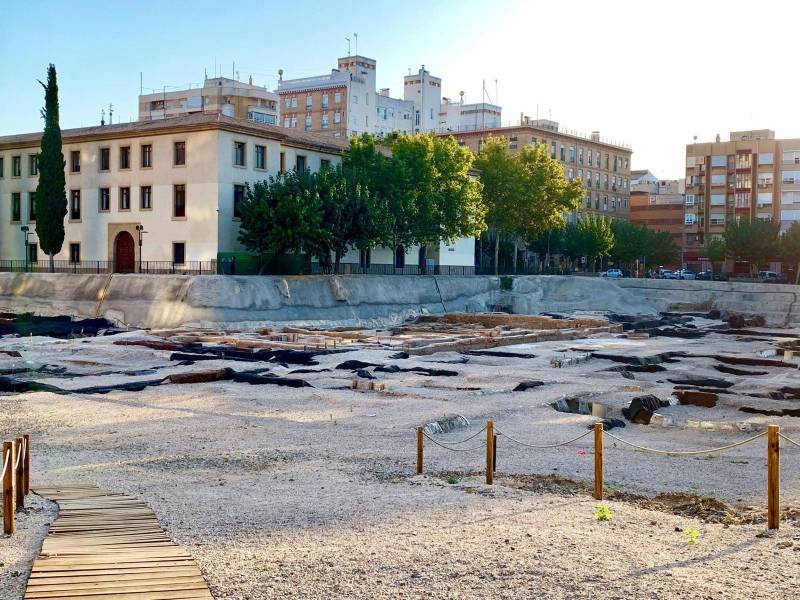
Archaeologists working at the San Esteban site in the city of Murcia are beginning to uncover how people lived in the city during the 11th and 12th centuries, a period when the region was part of Al-Andalus, the Muslim-ruled territory of the Iberian Peninsula. Excavations at San Esteban began around a month ago, and the project is part of a larger effort to study the area’s historical centre and its evolution over time. So far, 11 of the 59 planned excavations have been completed, providing the first real insights into homes, routines, and the objects people used in their daily lives.
One of the most interesting discoveries is a stone hiding place, similar to a small safe, found in the bedroom of one of the houses. Archaeologists believe it was used to keep valuable items or personal belongings secure. The team is carefully removing the surrounding stones to avoid damaging whatever is inside, and they hope to find out within a week whether it contains coins, jewellery, or everyday items. According to the technical director, the number of objects in this small space is unusually high, making it a fascinating find.
The excavations have also allowed researchers to map out two neighbouring houses, giving a detailed picture of how homes were designed at the time. Each house has a central patio, which served as the heart of daily life, and a north-facing room. In these patios, archaeologists have found wells for water and a range of household items that show how people lived and worked. One room has clearly been altered to create more usable space, which suggests that the houses were adapted over time to meet the changing needs of the people who lived there.
Although most of the finds date to the 11th and early 12th centuries, layers of the site to the north indicate that the area continued to be used in later centuries, possibly into the 13th and 14th centuries. The team pointed out that the excavation is still at an early stage, and more discoveries are expected as work continues.
The project has a budget of €1.26 million, and plans also include creating a large public square above the site. Beneath this square, a new interpretation centre will allow visitors to explore over 60 buildings and more than 100 features of historical value, which will make it possible to understand and experience the city’s past, so visitors can fully experience it.
Image: CARM