









Drivers in Spain could get fines cancelled if road signs or markings aren't visible
Spanish traffic rules require road signs and markings to be clearly visible before penalties can be enforced
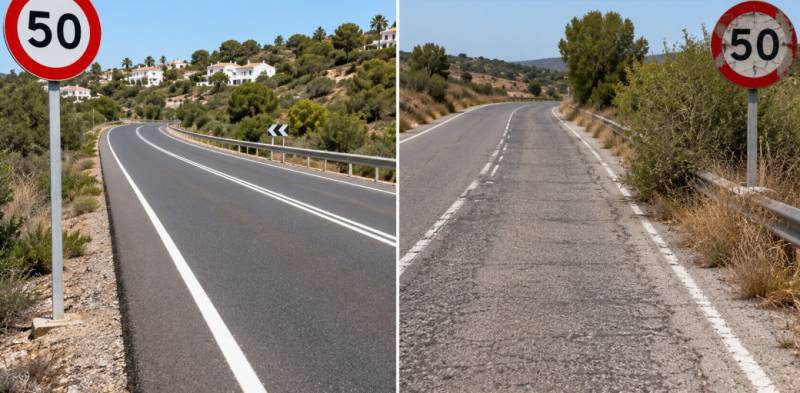
Most drivers in Spain simply pay a traffic fine as soon as it arrives, taking advantage of the 50% reduction offered for prompt payment and putting the matter behind them.
However, motoring experts are reminding drivers that not every fine is necessarily valid, particularly if the road signs or markings involved were damaged, worn out or impossible to see clearly.
Under Spanish traffic regulations, road signs must be visible, legible and easy for motorists to understand. If a driver can demonstrate that this wasn't the case at the time of the alleged offence, there may be grounds to challenge the penalty.
One of the most common examples involves road signs that have become obscured by overgrown vegetation, dirt, graffiti or even adverse weather conditions. Signs that have deteriorated over time and can no longer be clearly seen, especially at night, may also be open to challenge.
The same principle applies to road markings painted on the road surface. If a solid white line has faded so badly that it can barely be distinguished from the surrounding tarmac, or if a pedestrian crossing has become almost invisible, authorities could struggle to justify enforcing a penalty based on those markings.
Spanish regulations place responsibility for maintaining road signs and markings on the relevant road authority, whether that's a local council, provincial authority or another public body. If those markings have not been properly maintained, drivers may be able to argue that they could not reasonably have been expected to follow them.
There are also situations where a traffic sign may not be legally enforceable because it does not correspond to the official catalogue of authorised Spanish road signs. In other cases, conflicting instructions can create confusion. For example, if road markings contradict a vertical traffic sign or directions given by a police officer, the higher-priority instruction takes precedence.
Drivers who believe they have been unfairly fined have 20 calendar days to submit an appeal. Anyone considering this route should gather as much evidence as possible, including photographs or video footage showing the condition of the signs or road markings at the location where the alleged offence took place.
Supporting statements from witnesses or evidence that other motorists have received similar penalties in the same location can also strengthen a case.
There is already a recent example of motorists successfully challenging penalties linked to inadequate signage. Thousands of drivers were refunded after fines were issued by a speed camera in San Roque, Cádiz, where concerns were raised about how clearly the camera was signposted.
Although appealing means giving up the option of paying the reduced fine, drivers who can show that road signs or markings were unclear, damaged or poorly maintained may have a strong case for having the penalty cancelled altogether.
Find all the latest motoring and travel news here or join our Driving in Spain Facebook group for regular updates