











PROPERTY SEARCH

Could the Region of Murcia see the return of the monk seal after 50 years?
Experts say the coastline around Cabo de Palos still has everything a returning colony would need
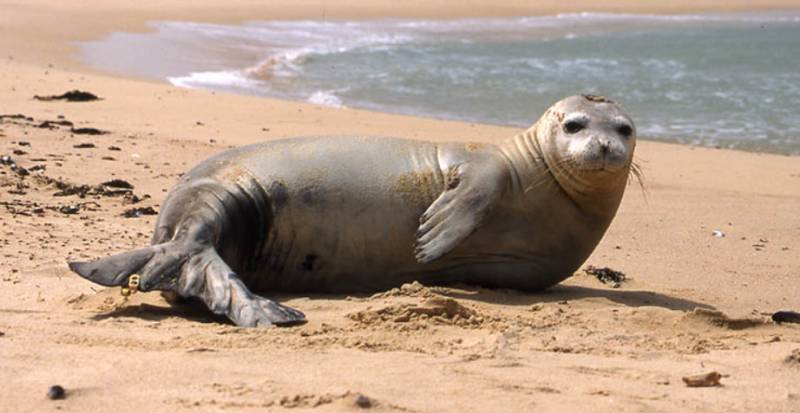
Half a century ago the Mediterranean monk seal was still a familiar sight along the coast of the Region of Murcia, one of the last stretches of the Iberian Peninsula where the species was ever spotted. Now, the Ministry for Ecological Transition has revived a long stalled plan to bring the animal back to Spanish waters, working alongside Mauritania, Portugal and Morocco to make it happen.
Anyone hoping to see seals back on Murcian beaches any time soon will need patience though, since this would be a slow process built on years of groundwork. Minister Sara Aagesen's department has commissioned a full technical, ecological and social assessment to establish whether reintroducing the species to Spain is even realistic.
The most recent attempt centred on a scientific project off Fuerteventura in the Canary Islands, where the government looked at releasing seals brought over from colonies in Africa.
The species survives today in pockets around Greece, Turkey and Cyprus in the eastern Mediterranean, while in the Atlantic a small population lives off Madeira in Portugal alongside a larger colony of more than 400 seals on the Mauritanian peninsula of Cabo Blanco, a number that's grown thanks to sustained conservation work.
The ministry has already begun talking to regional authorities about how the plan might take shape, aiming eventually to establish what it's calling a network of new monk seal populations on open beaches, restoring habitat the species once called home, although officials stress an initial viability assessment needs to happen first.
The Region of Murcia is said to be keen to take part in that evaluation, according to sources within the Ministry of the Environment, although the regional government says any decisions on specific locations will have to wait until the ministry's study is complete.
Pedro García, director of the conservation group ANSE, believes that the coastlines of Murcia and Almería are among the best preserved and most suitable stretches of coast available, and could support what he describes as an intermediate population between the western Mediterranean and the large Saharan colony, something he sees as a sensible way to help secure the species' long-term survival.
Historically the species was recorded along stretches including the coves of Calnegre and Cabo Cope near Lorca and Águilas, Cueva Lobos in Mazarrón, the Sierra de La Fausilla and La Muela, Cabo Tiñoso and Cabo de Palos in Cartagena.
Mr García pointed out that the habitat in several of these spots remains in good condition, with plenty of food still available along various parts of the Region's coastline, much of which includes isolated beaches and caves well away from built up areas.
Image: CMS