











PROPERTY SEARCH

Cartagena Port gains ground despite global uncertainty
Despite all the noise in global trade, Cartagena continues to perform well compared to other Spanish ports, with increases in cargo volumes and exports
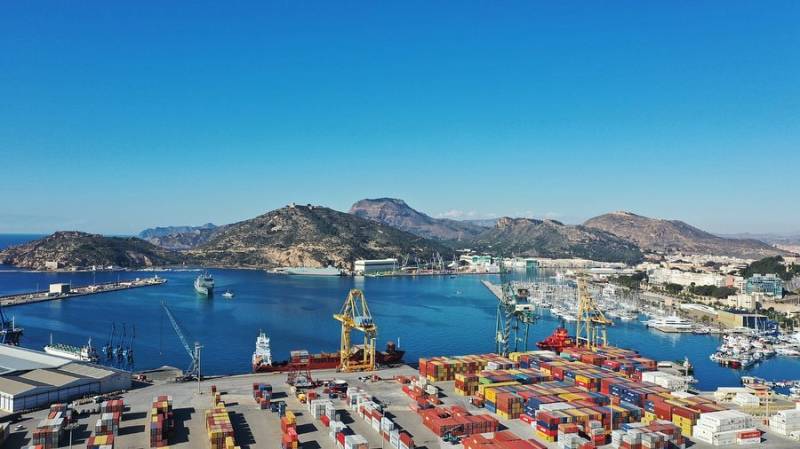
At the end of the first four months of 2026, activity at the Port of has continued to hold its ground, even with global instability still affecting trade routes and energy markets. Tensions between Iran and the United States, along with disruption around key shipping routes such as the Strait of Hormuz, have added uncertainty to international freight.
Even so, the port has managed to stay on track. By the end of April, total cargo volumes were up 4.5% on the same period last year. In total, Cartagena handled around 11.7 million tonnes of goods coming in and out of its terminals, compared with 11.2 million tonnes a year earlier.
That keeps it firmly in fourth place in Spain for freight traffic, just behind Algeciras, Valencia and Barcelona.
Liquid cargo, like fuel, gas and oil, which still makes up the bulk of activity in Cartagena port, continued to rise. Volumes reached 8.65 million tonnes, slightly above last year's 8.51 million. April saw a small fall of around 110,000 tonnes, but the overall trend remains positive.
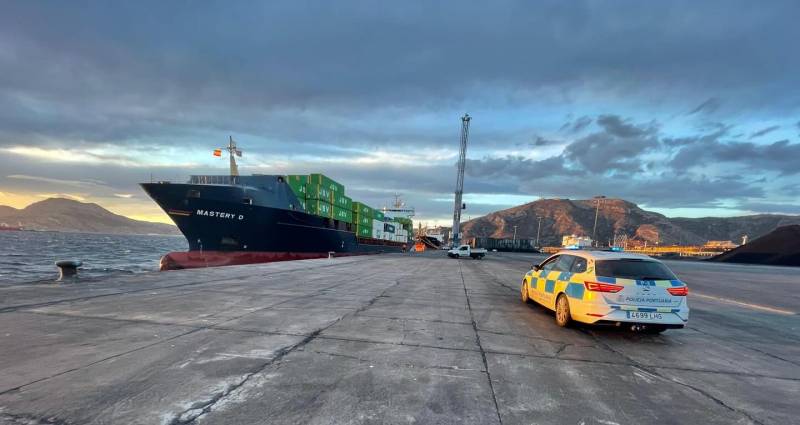 Dry bulk, like salt, grain, coal, iron, etc., was the standout. Volumes rose 16.7% year-on-year to 2.71 million tonnes, compared with 2.32 million in 2025. April alone was particularly strong, up around 40% on the same month last year. Cartagena is now the third busiest port in Spain for dry cargo, behind Gijón and Tarragona.
Imports fell slightly over the period, down 3.9% (around 300,000 tonnes), but still reached 7.72 million tonnes. That is enough to keep Cartagena as Spain's leading import port. It also remains number one nationally for liquid imports, ahead of Bilbao, Huelva and Tarragona.
Exports, which account for about a quarter of bulk traffic, rose 8.5% to around 2.5 million tonnes. Dry cargo exports stood out again, rising by roughly 39% to close to one million tonnes, making it one of the strongest growth areas among Spanish ports this year.
The picture across Spain
Across Spain’s main ports, total cargo traffic reached 181.9 million tonnes up to April 2026, a slight fall of 0.3% on the same period last year.
General cargo dipped slightly, down 0.5%, with just over 91 million tonnes moved.
Container traffic continued to rise, up 4.2% to more than 6.1 million TEUs (One TEU = one standard 20-foot shipping container), supported by growth in transit and import-export activity.
Liquid cargo increased by 2.9%, helped by stronger flows of fuel, gas and chemical products.
Dry bulk continued to decline, though at a slower pace, reaching 25.05 million tonnes.
Roll-on/roll-off traffic also dipped slightly, while both ship arrivals and passenger numbers saw slight decreases compared with last year.
See also:Nearly 18,000 cruise passengers arriving in Cartagena with seven cruise ships due in six days
Images: Puerto de Cartagena