









PROPERTY SEARCH

Cartagena and Granada become latest cities to consider burka and niqab bans
Municipalities across Spain are pressing ahead with bans on face coverings despite a failed national vote
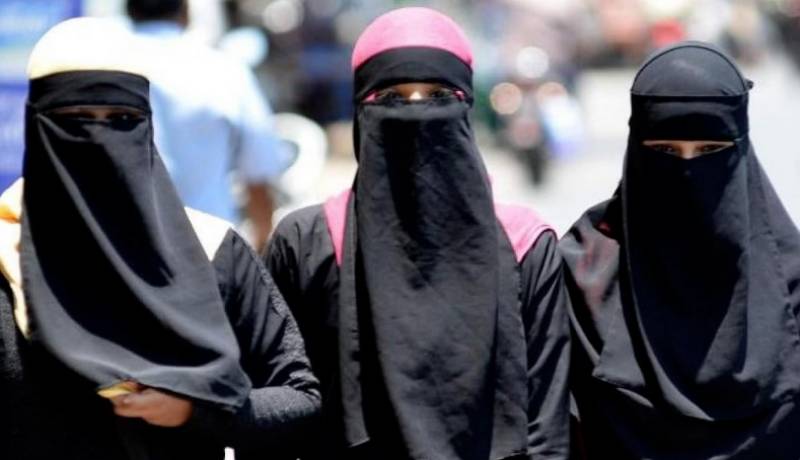
Cartagena and Granada have become the latest flashpoints in Spain’s increasingly polarised debate over the burka and niqab, with local governments moving to restrict access to public buildings for women whose faces are fully covered.
In Cartagena, a Vox motion calling for a ban on anyone attempting to enter municipal buildings with their face covered passed with the support of the PP this week. However, it was amended so that the council will first study the legal viability of such a measure.
The municipal secretary had warned that a specific report was needed to ensure any ban would not conflict with constitutional rights such as religious freedom or infringe on powers reserved for the State rather than town halls.
Vox spokesperson Gonzalo López Pretel defended the proposal as a matter of “security” and “to prevent impersonation”, describing the burka and niqab as garments that contravene “our civic values” and as “symbols of inequality” imposing “invisibility and subjugation” on women. He insisted the measure was “objective and proportionate.”
The PP backed the study. Its spokesperson Nacho Jáudenes argued that “we are not dealing with a custom; we are dealing with an intolerable symbol of control and submission.” He said his party would vote in favour of “equality and freedom.”
Opposition parties were sharply critical. Socialist spokesperson Manuel Torres accused the right of trying to “stage a spectacle” and of using the issue to link insecurity with immigration in order to “always point the finger at the same people.”
He warned that “religious freedom is a fundamental right and cannot be limited by an internal City Council regulation.”
Meanwhile, in Granada, the Provincial Council has gone further. A Vox motion to regulate access to provincial facilities where there is total face covering by means of the burka or niqab was approved with PP support. The result means women wearing these garments will not be allowed to enter government offices.
Vox deputy Gustavo de Castro described them as “a fabric prison for women” and said they hinder identification and compromise security.
“We will not whitewash symbols that represent female subjugation, nor will we accept that, in the name of a misunderstood multiculturalism, practices that do not respect our values are normalised,” he added.
The moves come just days after Spain’s Congress of Deputies rejected a national proposal to ban the burka and niqab in all public spaces, underlining the lack of a national consensus. While Vox and some in the PP argue that broader restrictions are needed, the governing parties and left wing groups maintain that existing laws already allow police to request identification when necessary.
Critics also point out that other countries have chosen a different path. In the United Kingdom, for example, there is no general ban on face coverings. Where identity must be verified, such as at airports, courts or for official documents, women can be asked to remove a niqab briefly in a private room, usually in the presence of a female officer. Supporters of this approach say it balances security and religious freedom without singling out a specific group.
The controversy comes amid wider rows in some municipalities over the role of religion in public spaces, including recent uproar in Jumilla after a local decision to ban religious celebrations in sports venues sparked accusations of discrimination and political grandstanding.
With more Spanish municipalities now considering their own rules, the legal and political battle is likely to continue. Whether local studies and ordinances survive constitutional scrutiny may ultimately determine how far these restrictions can go.
Image: Vanraj Chavda via Wikimedia Commons